
Playing In The Band
An unexpected adventure into sonic realms

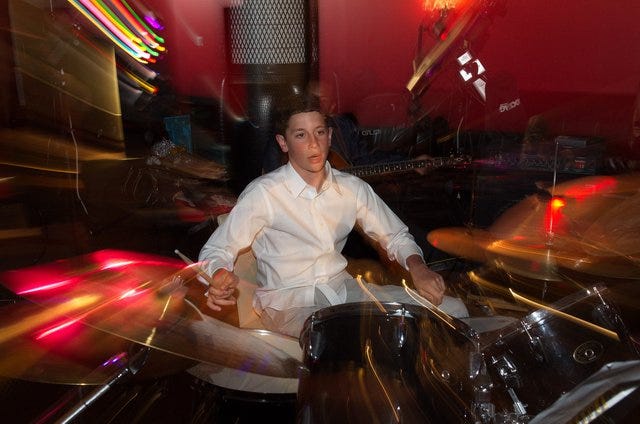
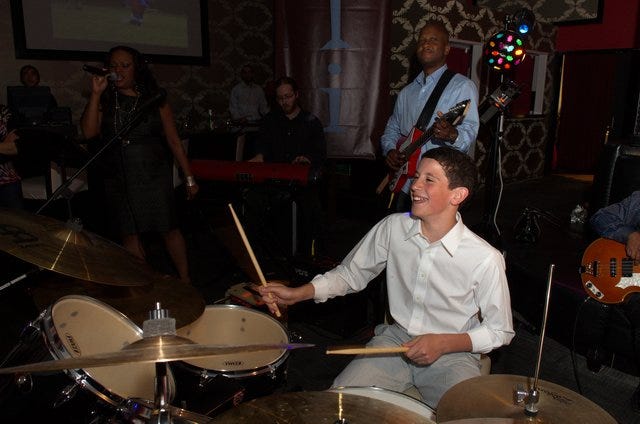
They had an extra trumpet, so why not? Besides, I’ve always wanted to be Ned Schneebly and have my ‘School of Rock’ fantasy fulfilled. I played piano when I was real little, then the drums around ages 11-13, (can’t forget the infamous Bar Mitzvah party entrance, smashing Hendrix’ Voodoo Child), and more recently picked up the guitar as a pandemic hobby.
The trumpet is something entirely different though, an instrument whose noise derives directly from the source. From deep in my lungs air travels up and out of me, squeezing through pursed lips, channeling energy into brass metal, where hopefully it delivers a sound that isn’t too unpleasant to the eardrums. It’s a full circle, the breath leaving the body, only to be returned in the form of soundwaves.
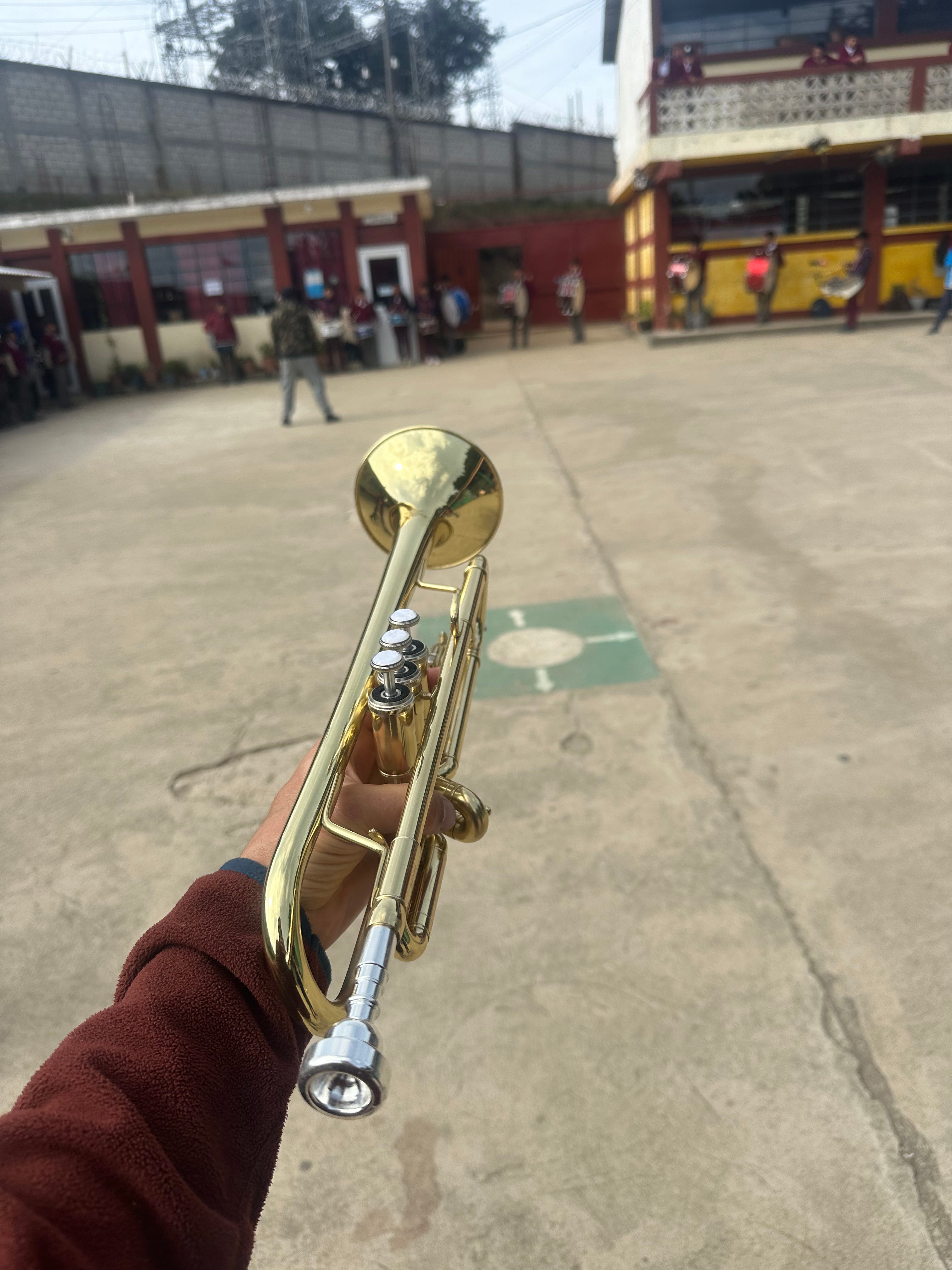
Looking at the thing I naively thought, “well hey, it can’t be that tough can it? It’s only got three little buttons anyways.”
Humbling experiences are worthwhile ones. They remind us how much remains beyond our teeny tiny wheelhouses, where there’s room for growth. It’s easy to get in the groove of what we’re good at. Treading water in that familiar part of the pool, we lull ourselves into a false sense of mastery, clinging to control in the shallow end, neglecting a vast ocean that waits to be explored.
What’s the point in toiling around in areas where we’re just novices, where we might feel embarrassed, where we have to figure something out from scratch? Well, it’s precisely that. Embarking on that journey once again to figure it out from the ground floor, we learn something about the learning process itself that we can apply to other facets of our lives, and also, OF COURSE, we learn something about ourselves, cliche as always.
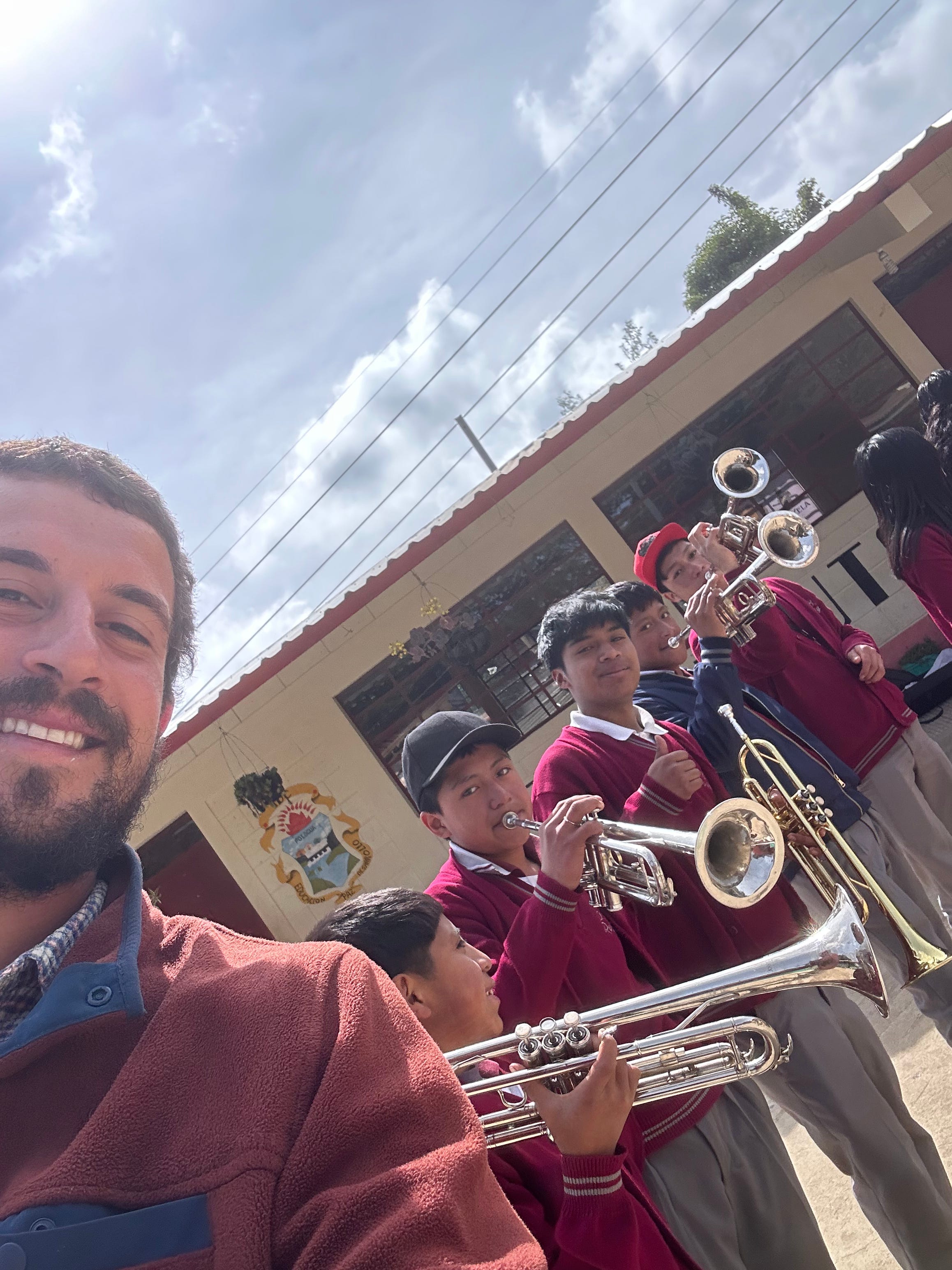
Walking through the gates of IBC Pologua for my first band practice, bombarded by the deafening blows of boys pounding on bass drums, out of tune squeaks and shrieks of saxophones, trombones, and trumpets, I smiled at the students who stared at me, touting an outer confidence that I hoped would mask an inner self-consciousness.
I sat down, unzipped my black case, then unsheathed the shiny metal instrument from a white bag inside the case, unscuffed, a new beginning. Placing the mouth piece into the body hesitantly, I looked up at a handful of inquisitive faces, staring, wondering, what will happen next?
What happened next was remarkable, I placed the trumpet to my lips, and with my first breath, produced a triumphant sound, sending the students into a frenzy. Here at last the prophecy was being fulfilled. “A prodigy is amongst us,” they exclaimed, “it is he, Jewie Armstrong!”
PSYCHE!!
What happened next was, well, nothing. I blew a big ole breath into that piece of metal, and to my disappointment, I wasn’t a “natural.” I blew again, and again, my cheeks puffing up, my face turning red, probably equally from strain as from vergüenza (embarrassment), and not a peep to be heard.
As panic lightly simmered in my being, I sought out the group of trumpeters, who, although 10+ years younger than me, were now certainly my mentors and hopefully willing aids to a struggling boy from Atlanta, just trying to make a sound come out of his bent piece of metal, hoping to play in the band. These kids, while I’m sure amused by the fact that their foreign teacher had no business playing the trumpet, spared me their laughter, at least in front of me, and proceeded to show me how to pucker and purse my lips just so, to channel the airflow and vibrate appropriately, to indeed produce a sound.
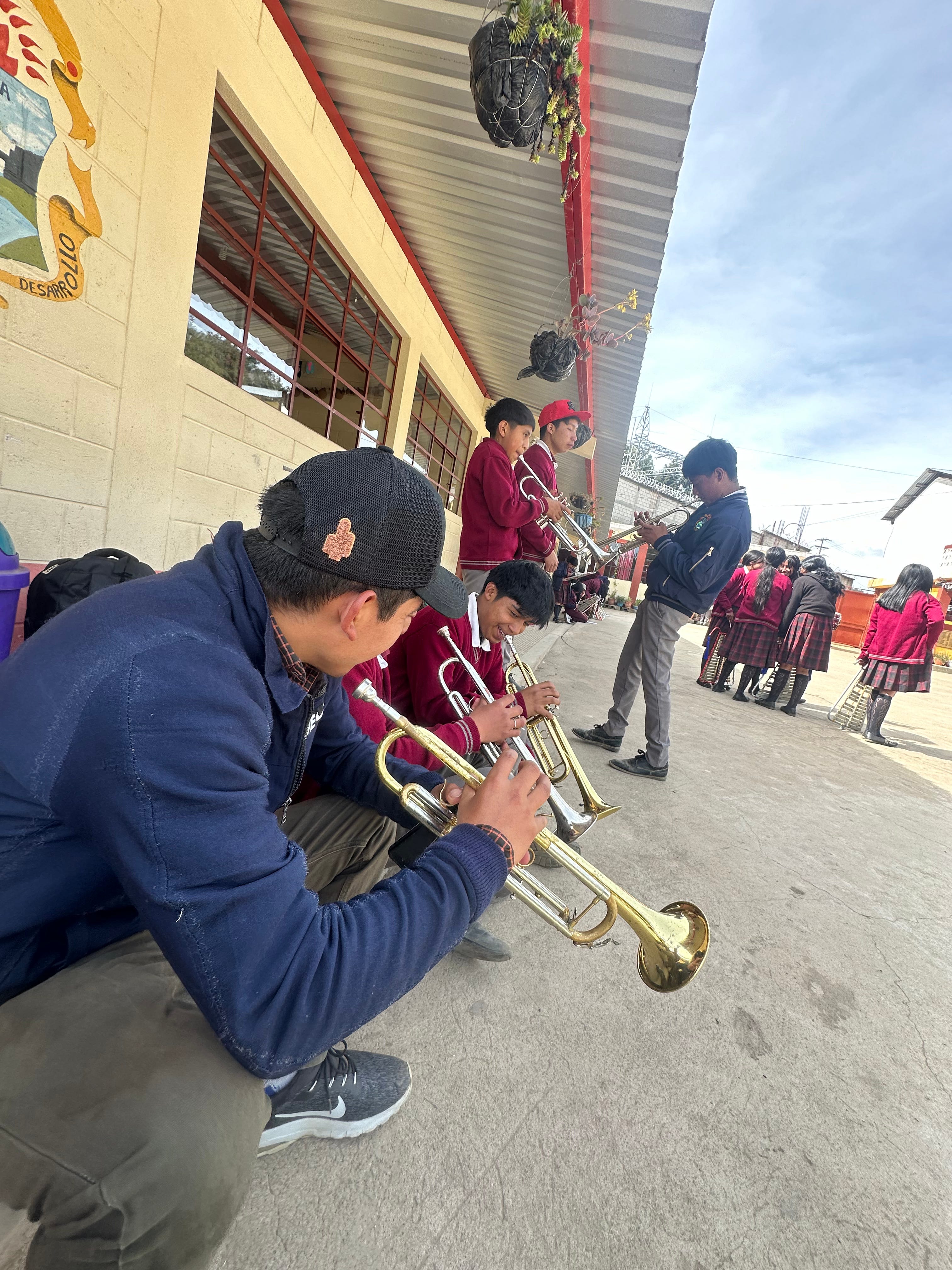
The joy and self satisfaction I felt at simply making one terrible noise to come outta that trumpet, I’m only slightly ashamed to admit. The following weeks and months saw marginal improvements in my trumpeteering abilities. Noises eventually turned into notes, and the consistency in which those notes were sustained saw an increase as well.
Turns out the fact that the trumpet only has 3 buttons makes it quite difficult as an instrument. Much of the onus on pitch and range comes from the tightness/looseness of your lips and the force with which you blow into the instrument. Thus, I often found myself pressing down the correct buttons, but with my pitch way off, I looked longingly at the others from my distant island an octave above or below where we were meant to be.
Around 60 deep, the band was comprised of a percussion section with guys and girls (bass drums, snares, merengue guiras, and cowbell), the lyras, aka xylophones, which was all girls, and the brass section comprised of trombones, trumpets, and saxophones, which was mixed guys and girls, and a gringo.
Our student band leader, the true leader of the band in my opinion, was a young man named Edin, in 3ro Basico. With a cool demeanor and a smile that flashed a row of gold teeth, I always enjoyed watching him count the band in to begin playing, blowing his whistle and throwing his hand high four times in dramatic fashion.
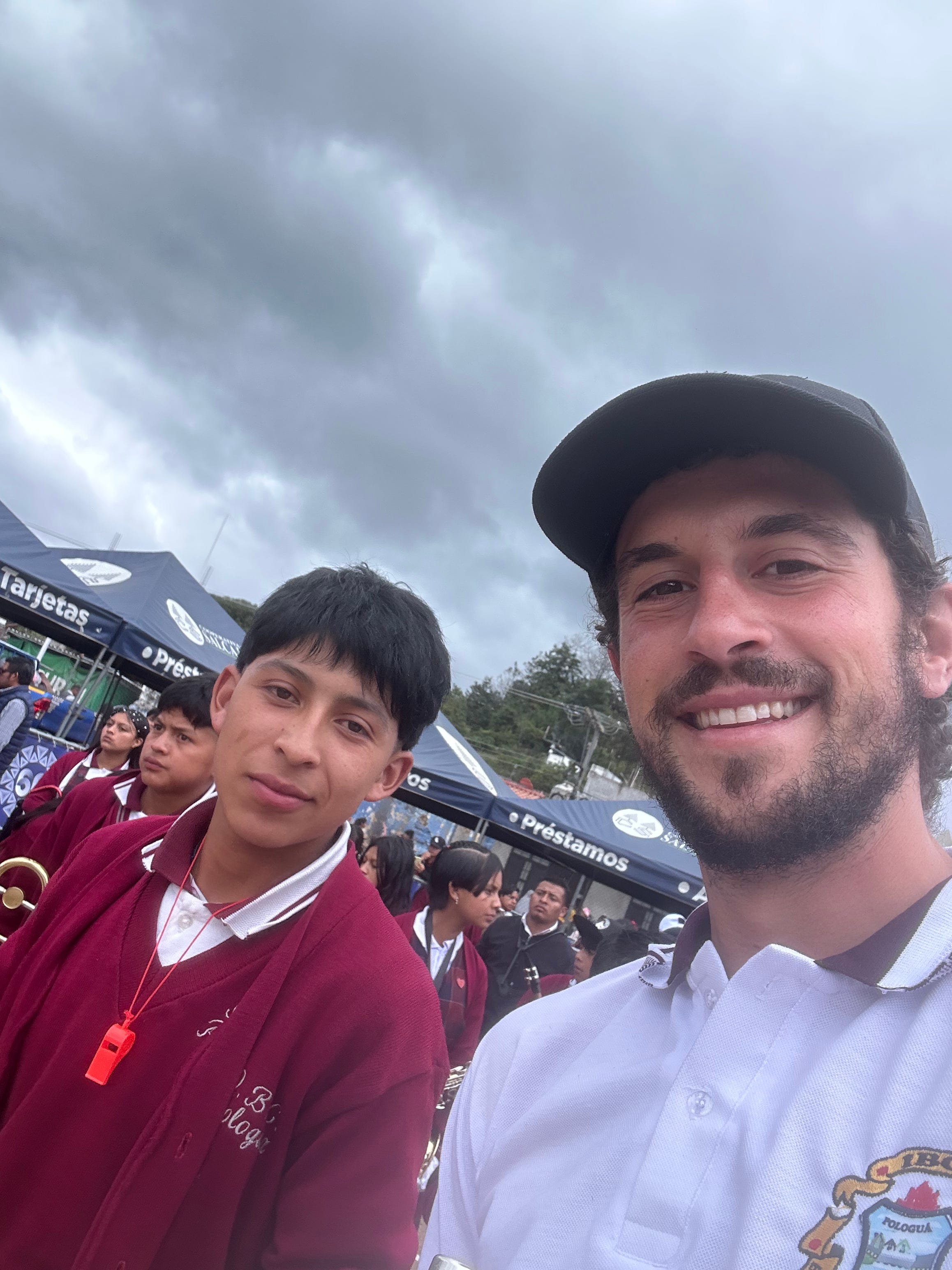
I also loved watching this one trumpet player in our group really get into the dancing choreography. This particular boy was maybe half my size, and though small in stature, his energy was always high, with a goofy grin on his face as he bounced back and forth.
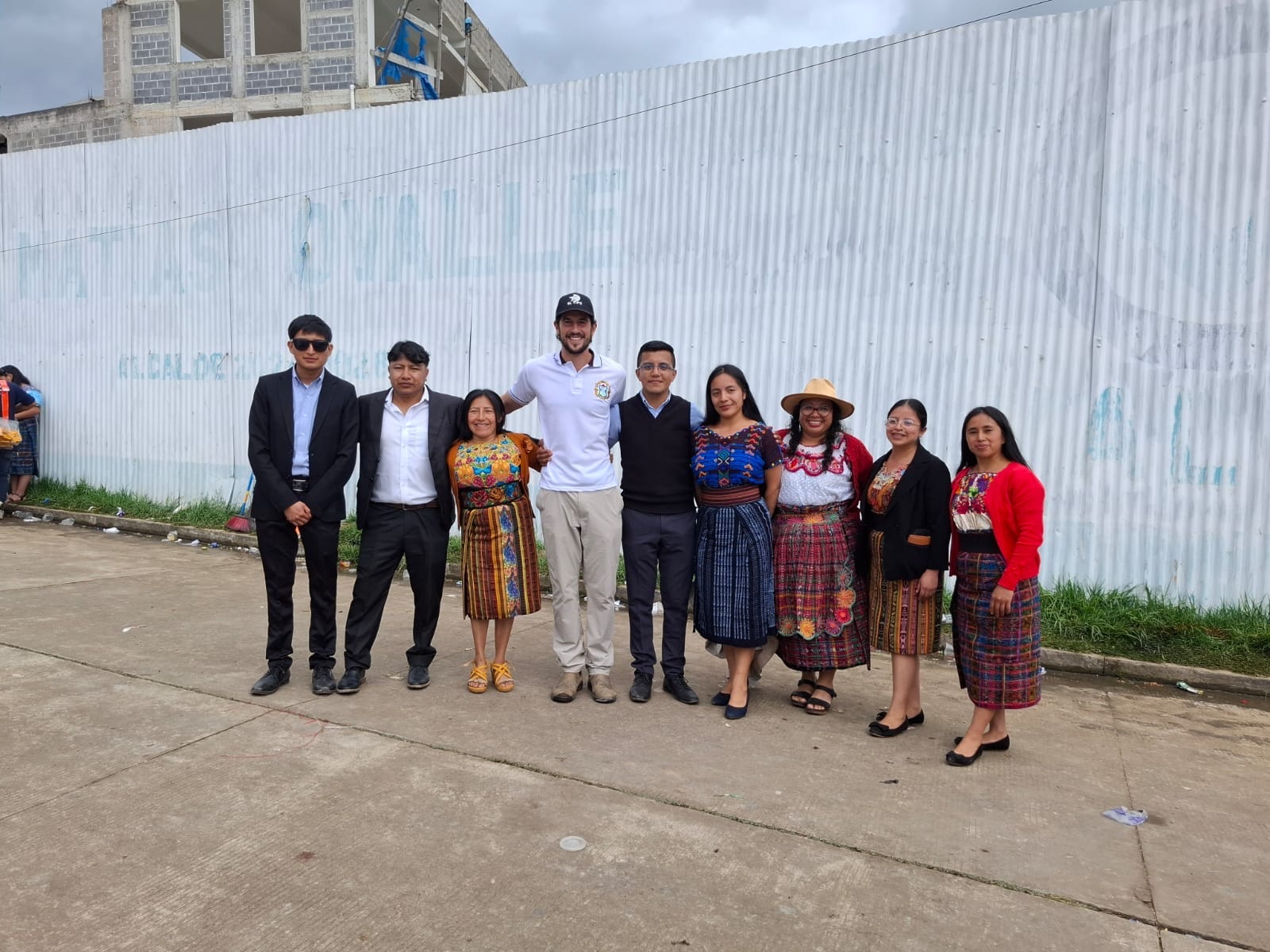
I wasn’t the only teacher in the band, there was also Profe Jefferson (drums and trumpet), Profe Jesus (trumpet), and Profe Jairo (trombone), Los Jefes, who participated as well. Their support was crucial in the band’s success, keeping everyone motivated, and giving extra help when the paid band teacher couldn’t show up.
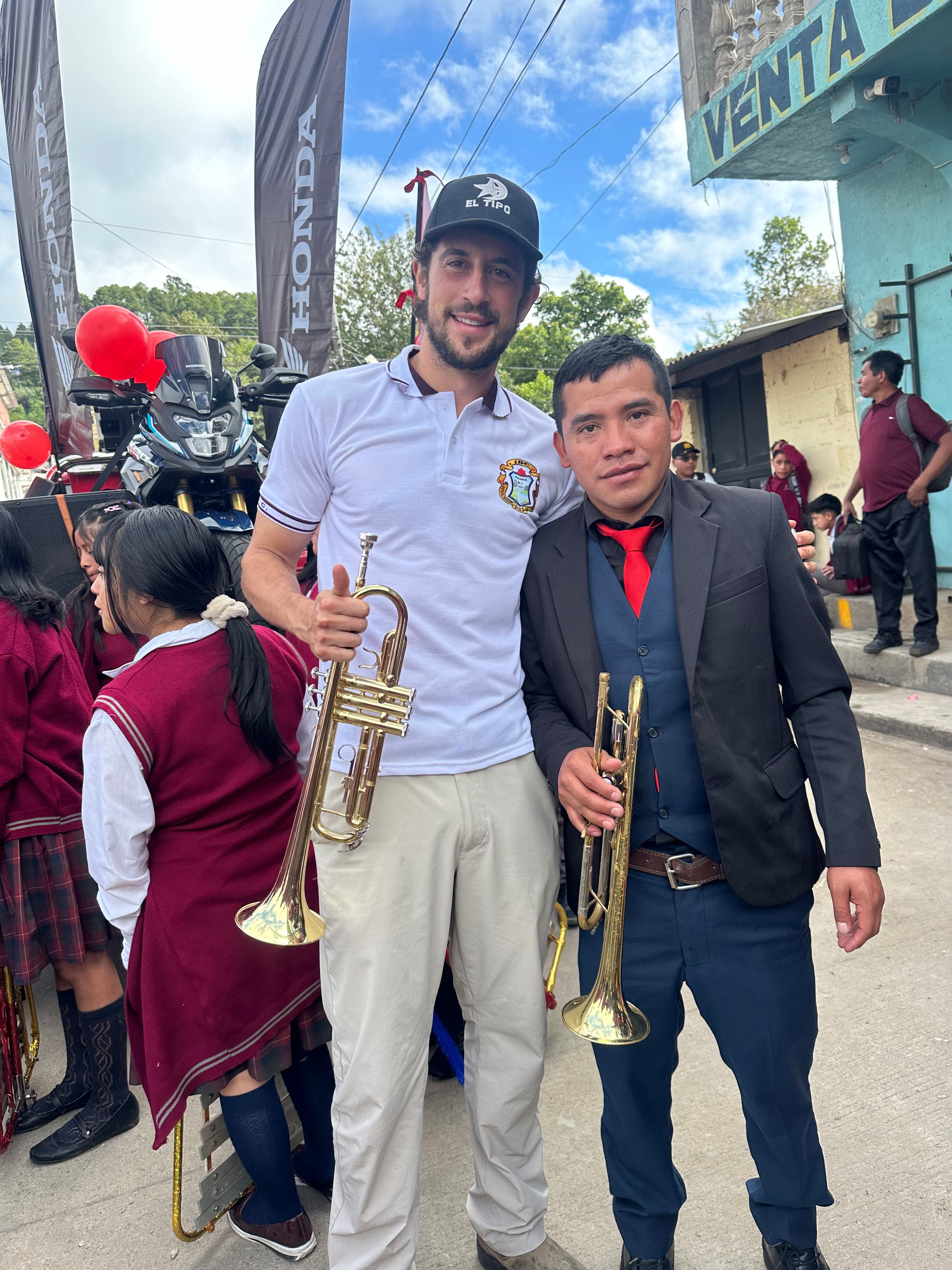
I can’t claim to be a dedicated practitioner, and oftentimes I showed up to rehearsals hoping the trumpets wouldn’t be spotlighted, each member having to play the part one by one, only to reveal my lack of hours logged and my inadequacy. For months I was stunned at our seeming lack of improvement as a band, while certainly not contributing to its betterment. The motivation to really buckle down and lock in as a unit wasn’t very present in our ranks, and, I’m sorry to say, Guatemalans do seem to defy the stereotype that Latin people have a certain inherent sense of rhythm.
Our biggest issue was keeping a steady tempo and playing to the beat. The percussion section would surge ahead in a hysterical frenzy, leaving the lyras in a lagging incoherent mess, while the trumpets and trombones sat in the middle trying to decipher who to stick with. As the weeks passed I fell into a monotonous haze, the novelty of learning a new instrument having worn off, and the repetitiveness of hours and hours of rehearsing the same songs, only to repeat the same mistake virtually every time, wearing on me.
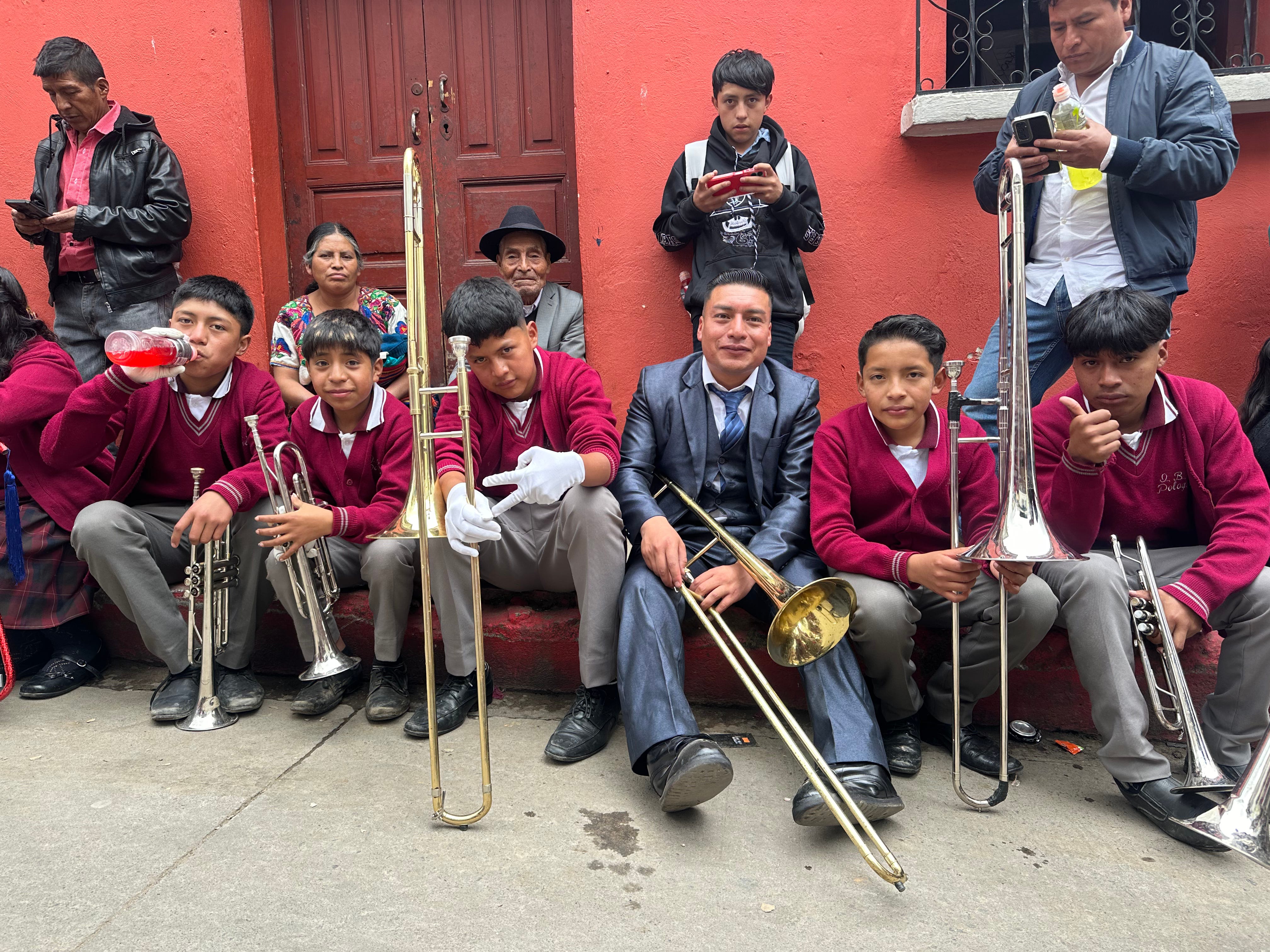
There were always amazing moments though. Every rehearsal I had at least one moment of awe, where the whole nature of the situation dawned on me again, the preposterousness of how I’d ended up right here, right now, rehearsing with a Guatemalan middle school marching band, and just how unlikely yet incredible that was. That train of thought and those little moments never failed to fill me with joy. Smiling internally and externally, I’d bask in the ridiculousness and beauty of receiving the ultimate gift, a precious human life.
Musically there were amazing moments and breakthroughs during those months as well. I found playing the trumpet to be quite meditative, and loved closing my eyes while playing. Feeling the breath moving through my body, vibrating through my lips against the metal mouthpiece, then hearing the result, and the combined sound with the rest of the band, it felt like a collective OM, a soundbath.
Focused and directed action that produces a desired outcome is inherently satisfying, and when that takes place within a group, the feeling is amplified. When parts started coming together I felt joy for the group, seeing the vision of what we could accomplish.


Our first big performance came in late July when we got invited to play in the big desfile (parade) for Momostenango’s Feria, the municipality which Pologua is a part of. While I didn’t feel we’d put together a stellar performance during rehearsals, I had faith that come game day the team would bring our A game. What truly gave me confidence was slipping on the white gloves. Not sure why they were included with the trumpet, but I’m certainly not complaining


Walking from our drop off point to the start of the parade we passed cars and horse drawn carriages decked out in flowers carrying various “Reinas,” as well as different primary and middle schools from the surrounding aldeas. Little kids dressed as doctors and artists milled about, a multitude of other bands readied themselves, and dancers with batons twirling stood at attention.
In classic Guatemalan fashion, the parade moved at a snail’s pace, the 2 mile route taking us approximately 5 hours from start to finish. There were plenty of breaks in the action, and just standing around for that long and moving that slow was exhausting.


Side bar- One cultural difference which I’ve often noticed and found incredibly interesting is the way in which people here express, or don’t express, their emotions compared to the US, or other latin countries I’ve visited. The norm here is to look fairly stoic, with fairly little outward expression of joy or fun on occasions that back home would elicit big reactions. Whether it’s a parade or a concert, you’ll be hard pressed to find people clapping, shouting, hootin’ or hollerin’. At concerts during town fairs you will see plenty of people dancing in pairs, but in a funny sort of way where they aren’t looking at each other, and their facial expressions almost seem like they’d rather be anywhere else in the world.
My mini investigation, asking colleagues at school whether or not they thought people genuinely enjoyed themselves at these events, revealed that yes indeed, the masses apparently are joy-filled, however that joy just isn’t manifested outwardly. Through more conversations with friends and deeper contextual reflection, it makes perfectly good sense as to why this might be the case. Guatemala endured many years of incredibly violent civil war, and the indigenous communities (as is often the case) took the brunt of the persecution. It makes sense then that people might not feel so comfortable expressing themselves publicly when a generation ago they were being killed in the streets for slightly inconveniencing the military.


With the sky growing ominously grey, we arrived in the soccer stadium after hours of walking, standing, and waiting, to play our set in front of the Mayor, Queens of the fair, and other important individuals. It felt fated that the moment we started our first song, “Lluvia de Primavera” (Spring Rain) the skies opened up. While everyone else ran for cover, including the band director, we played on in the pouring rain, which provided a sort of cinematic aspect, and proudly finished our set. Wet and cold, we finally ran for cover as well.
Our main performance came nearly a month later, for Pologua’s town fair. This time we were fully suited and booted with our special band uniforms, and of course, the white gloves. There was great energy as we stood waiting by the gas station where our parade began, on a cloudy and chilly morning. This time it wasn’t just the band, we also had the accompaniment of the dancers, and gymnastics squad.
Standing a couple feet above the crowd and my fellow bandmates, it didn’t take long for some of my Peace Corps friends who were coming to see me play, and mostly to catch a glimpse of me in my uniform, to track me down. We ran through our medley of 8 songs again and again, with Edin leading the charge.


Making our way down the closed off stretch highway towards town, what really struck me was how many familiar faces I spotted. Apart from the Peace Corps friends who had kindly shlepped themselves up to Pologua to support me, there were so many faces from around town I recognized. In just 9 months it was cool to see how many connections I’d made, from my direct family, cousins and friends of the host family, to vendors at the market, to folks I just walk past daily and say hi to, I was greeted with smiles, nods and waves the whole way.


This parade was thankfully much shorter than the first one in Momos, and we made it to the basketball court at the primary school in good time. For the grand finale we played our hearts out in front of the local government officials and the ‘Reinas Indigenas’ from various communities who were invited to attend.
I won’t lie, I totally messed up at the beginning and started playing the wrong song, but recovered quickly. We hit a lil shimmy, a lil two step, and brought the energy. Sounding crisp and energized as a unit, I couldn’t hold back my smile, soaking in the moment with the rest of the band.


Playing in the band has been one of my favorite aspects of my Peace Corps experience, something totally unexpected and wonderful. Not only did I get to try a new instrument, but it helped me connect with the students, travel to new places, and most importantly, wear some skinny pants, a vest, and white gloves. I’m grateful for the opportunity I was given by the school, who so generously lent me a brand new instrument, and to the students in the band who accepted me into their group, helped me learn the songs, and made me sound better than I am.
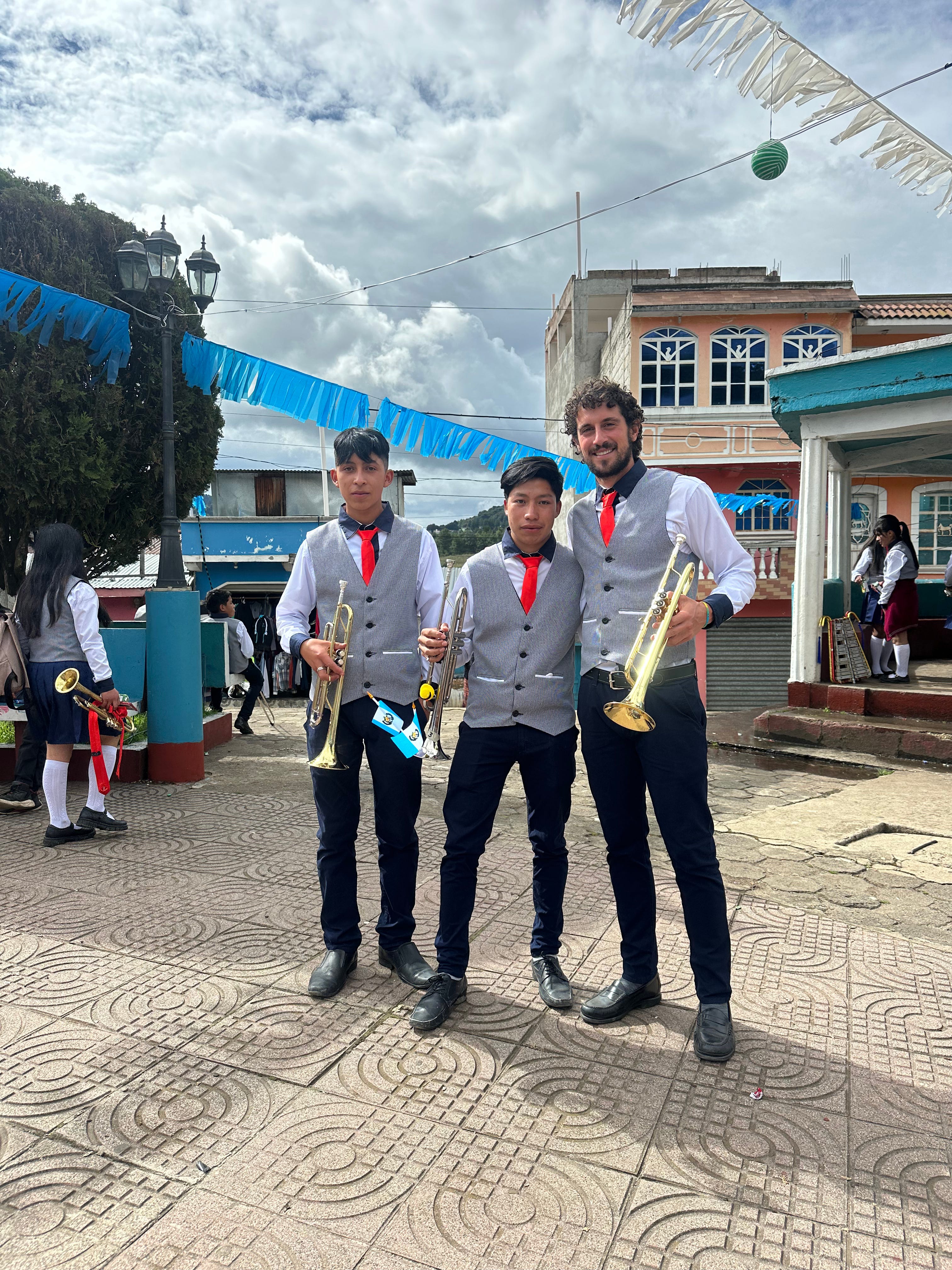
I learned that while perhaps I’m not a natural trumpeter, nor a prodigy, the process of learning something new is an enjoyable and worthwhile pursuit. I learned not to take myself quite so seriously, because if we’re being honest, it’s sorta pretty funny to be ‘bad.’ While the trumpet’s been sitting encased in my room, resting, I sure hope it’s ready to come out of retirement next year. With a little luck and some more practice, hopefully I’ll be slightly less out of tune, and still fully a head taller than everyone else.
Til next time, thanks for tuning in as always. Sending lots of love to everyone all over the place!
Eli, your tenacity is laudable, and your musicality is incredible. Louis
Armstrong, watch out!